By Jazz Zhu, edited by gina young
ACCELERATOR is Los Angeles Performance Practice’s flagship artist development program—a nine-month intensive that empowers multidisciplinary artists to build sustainable, visionary, and self-determined creative careers. A thoughtfully-selected cohort of twelve Los Angeles-based artists meets bimonthly to engage in professional development workshops, in-depth mentorship, and peer accountability to design a resilient creative life. By the end of the program, participants will have artist statements that celebrate their whole selves, a personalized strategy for resourcing their practice, and a sustainable approach to producing the work they’re passionate about.
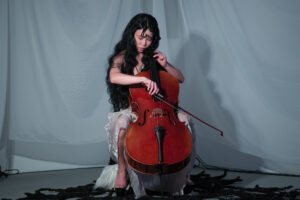
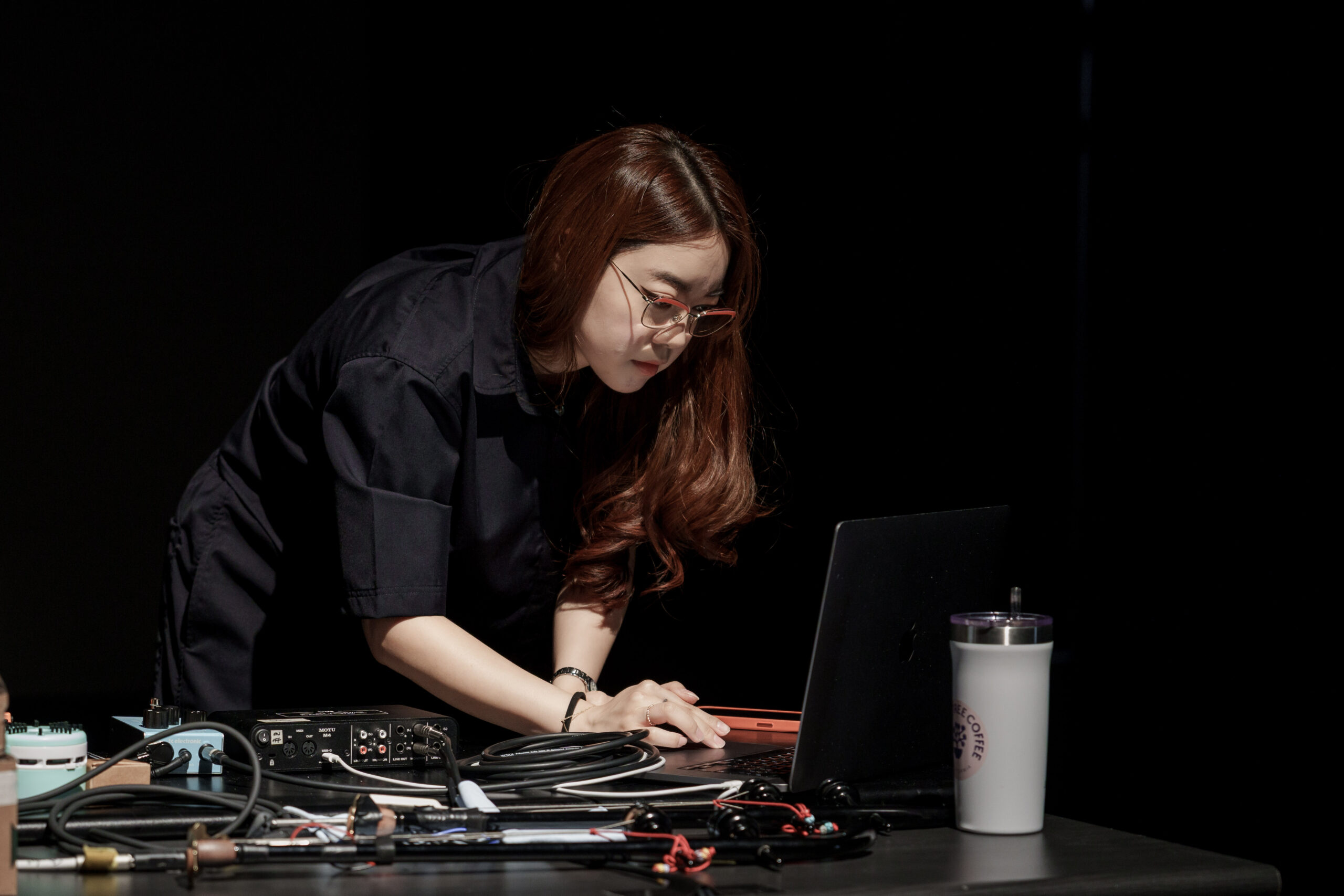
ACCELERATOR cohort member Jeonghyeon Joo (she/her) is a haegeum performer/composer based in Los Angeles and Seoul. Her practice includes performance, composition, improvisation, artistic research, collaboration, writing, and teaching. She explores the physical, social, cultural, and political relationship between the performer and instrument, frequently collaborating with filmmakers, visual artists, composers, and performance artists.
For those who don’t know you, how do you introduce yourself and your background?
I’m Jeonghyeon Joo. I go by Joo, which is my last name. I play haegeum and I compose music. I have been introducing myself as a performer/composer for many years, but these days I’m introducing myself as a composer/performer. I have a deep performance background as an instrument player, but I think I have been shifting gradually toward more of the composition side, but those practices, of course, are not separate, they are very intertwined. So I would usually introduce myself these days as: I’m a composer/performer and I play haegeum which is a Korean two-stringed bowed instrument. I’m classically trained in that instrument and have been working in the “new music,” or “experimental music,” or “performance art” field more in the recent five, six years.
What was your upbringing like and did you always know you wanted to be an artist?
That’s a very deep question because I think upbringing really shapes you as a person. I was born and raised in Korea, South Korea, and of course, I started piano when I was really young, like all other Asian kids. I liked it, but I was not serious about it. I wanted to learn violin when I was 10 or 11 because piano is great but I didn’t like practicing it.
I told mom I want to learn violin, it’s a string instrument and it looks super cool. I really loved the bowing part of it which was very different from piano. She was like, “You’re kind of too late to learn violin.” Because, at that time, Asian kids at 11, if they’re playing violin, they start winning international competitions, they already have great technique and skills. They’re already going to Curtis or Juilliard, so she was like, “You want to start violin now?”
She proposed “Hey, if you want a string instrument, what about haegeum?” I did know of haegeum, but I didn’t really know what it was. At that time, haegeum was kind of slowly appearing in Korean media, Korean dramas and lots of shows. There were some star haegeum players appearing on TV at that time. So it was becoming a thing. And I think my mom thought, that’s a Korean instrument–if you’re good at it, you’re going to be one of the world’s best ten players because it’s a Korean instrument. I was like okay, I’ll take it, that sounds fun, that sounds kind of more unique than violin.
Excellent.
I never thought, this is going to be my whole life, or, I’m going to be committing to this instrument for so many hours of the day. But I think it just naturally became a part of me during my formative years. I just ended up playing it so much. And I mean of course I ended up becoming a professional player, I went into the competitions, I went into the prestigious music high school and I majored in this instrument in college and everything. So it slowly and gradually became a thing in my life, which I didn’t really intend at first. I think a lot of artists are like that, they just get into drawing and then, they’re a painter now, you’re into acting and you’re in theatre, things like that.
And living in Seoul, living in Korea, playing a traditional instrument, but being a young person who plays a traditional instrument, I think that kind of positioned me… not weirdly, but in a place that I had to actively think a lot about, what does it mean, playing this instrument in this era? Because I would get a lot of direct and indirect questions about that. Like, “Wow, you’re playing a traditional instrument in the 21st century!” which I never thought about, because for me, it felt not that different from, let’s say violin, which is also a traditional instrument. The haegeum didn’t have that much specificity to me at first, I’m just a kid growing up in very modern Seoul in the 21st century. But I had to start thinking about those external frames like “traditional instrument,” it’s “Korean,” “Oriental,” “Asian,” pretty soon. I think those contrasting frames made me think about, “What do I want to do with this instrument?” from a formative age.
From violin to haegeum.
So I didn’t end up learning violin at all. And of course I was still playing piano until I was 15, 16, something like that. But yeah, even when I started learning haegeum, I didn’t have that much of a huge sense that this is Korean, or piano’s western, because it was basically getting lessons from the same teachers either way. I go to a school and either play piano or haegeum. I think the cultural kind of thing about it and the physical specificity of it, I think I grasped it later in my life, I guess.

Photo by Shin-joong Kim
Do you think your life would have been different if your mom was like, “Yeah, let’s go play the violin”?
I think so.
So you did your undergrad and master’s in Korea, and when you were applying to DMA (Doctor of Musical Arts) programs, what were you looking for?
At that time (and still), a lot of programs that institutions in Korea offered separated performance and composition, which is executing and creating, but I didn’t really think they were different when it came to my practice. I wanted to find a program that really incorporated them. I was like, I don’t just want to perform, I don’t just want to compose, and I was getting into improvisation. I just got introduced to the underground experimental music scene in Seoul and I discovered there are so many cool people who think “outside the box” and music practices out there that I never thought about and that school never taught.
I wanted to do my own music and there’s no programs, at least academic programs, in Korea where I could do both. If you’re doing haegeum, you’re just mastering repertoires until you die, basically. Or if you’re a composer, you’re putting the notes down on a music sheet and mastering those Western harmonies and theories and things like that.
There were some programs in Japan, but I don’t speak Japanese, so I was looking in the States and I was looking up CalArts and thought, this is a program for me! This sounds great to me. This is exactly what I have been looking for.
What a journey. And as far as I know, the DMA cohort at CalArts isn’t the biggest.
It’s really small. They only accept two students a year at the CalArts DMA program. And I mean, I was mostly researching online, I was just scraping all the information that I could find online. And then I read that CalArts is one of the first schools in the United States to start a performer/composer program. Now they have programs like this at more places, but CalArts felt like the right place for me to grow.
Every year there are only two doctoral students in music?
Yeah. Yeah.
What was that like? Because I know a lot of grad students, they have a bigger cohort where everyone learns and grows together. What was it like to have only one other?
Well, with my cohort, Emilia, we became best friends. We are like sisters; she’s my Ecuador unni now. I love Emi, and she’s an amazing percussionist and composer. Anyways, it’s a three-year program. So when you’re in the program, you basically interact with five other cohorts. Everybody was so unique. We all had very different backgrounds and practices, the six of us played all different instruments. We were from all different places. It felt very full and rich in terms of inspiration and influences. I liked that kind of intimacy, and we would deeply talk about anything all the time whenever we met on campus. Everybody had their own projects.
We were able to work with anybody, any professor that we wanted to work with, it was the support that they give and you’re allowed to do anything that you want, that kind of freedom. The support and inspiration that you have around you were just amazing. So even with that small program, I didn’t feel it was lacking something, it was the opposite. It was full of new, original ideas and a variety of music that we shared.
Did that teaching experience help when you later became a professor?
When you’re doing coursework, it can be a little overwhelming because you want to compose, you want to be pursuing your own projects, and sometimes preparing for classes and teaching can feel overwhelming, my gosh, it’s a pile of things to do. But I think that is also the charm of being in such a hectic, busy program–you just have many skills that you have to train yourself in: as a composer, as a performer, as a teacher, as a communicator, everything.
I love that, and what you said about CalArts having a very close-knit community of musicians who work together and work with different professors however you want. That sounds so different from what most peopleimagine music schools to be, because especially for Asian kids from Asia or who grew up here, it’s like everyone plays the same instrument. So there’s competition. You want to be the principal. You want to be the concert master.
Yeah. Right. Just being out of that way of working or the traditional hierarchical way of learning. CalArts is nothing about that. Going from a classical institution to CalArts, that just opened up a lot of different worlds for me in terms of, you can learn this way, you do a lot, learn a lot just by talking and playing together or doing a project together. It’s not just about sitting in a lecture room or going to a lesson and just one way of learning. That was really awesome, and it opened up a new world and I met so many wonderful collaborators there who became my friends or regular players that I would play with frequently. I still work a lot with people whom I met during CalArts and I think the CalArts community in LA is huge. I think community was a kind of core value at CalArts–you value people, you value the people around you and pursuing something together and being with kindred people.
Schools don’t usually teach us that because it’s always technique, and theory…
Right. Yeah.
When you are teaching younger generations are you incorporating that into your own teaching philosophy?
I think so. I try to be cool but I don’t know what my students will think about and I’m kind of the person who believes you cannot really teach composition, you cannot really teach creativity… I mean you can share the techniques or tips that you already mastered, but I think teaching composing or being creative or finding your own voice is nothing that you can achieve directly, learning from one very specific person.
So what I try to do in my teaching practice is to introduce a lot of things, and give them opportunities to be exposed to a lot of different things so that everybody can have their own pathway. Everybody can pursue their own value rather than, “this is a good thing that you have to do,” rather than “this is the best music in the world.”
But yeah, teaching is hard. It uses a different part of your brain compared to composition or performance practice. Sometimes I have to be a little bit of an actor, and I have to have good energy all the time. I just try my best. I’m on my sabbatical now. I love it.
How have you navigatedthe music world in the States and back home after you graduated from CalArts? Did you imagine that you would be splitting your time between the two places?
I never thought that I was going to be this bilocational. After I graduated or around when I was wrapping up my coursework at CalArts, I really wanted to stay in LA and be more deeply involved in the community and make more of my own work. I never imagined that I would be hired right away. But you never know what’s going to happen in your life. I got hired during my last semester at CalArts. I was teaching online and I was also finishing my coursework and everything. So that transition was very quick. As soon as I graduated I didn’t have a moment to debrief or decompress everything that I did at CalArts. But being able to work with people who are based in both Seoul and LA has been very amazing and I think it was a pretty lucky period of time.
When you’re creating a new piece, what does your process look like?
It’s different all the time. Sometimes it’s a piece for an ensemble, or sometimes it’s a larger-scale project, it’s more like a long-term seasonal project, or sometimes it’s like a gig so I think there are a lot of different types of work that I do as an artist. Like, I would improvise and I would play a gig, and I would write a piece for an ensemble that consists of seven or 20 people. Or I would do a project with specific collaborators over multiple years or so.
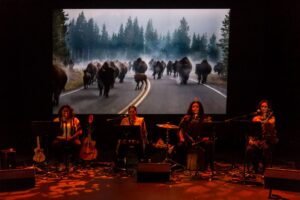
The most recent piece that I wrote was a 15-minute piece for seven Korean zithers that I got commissioned from a performer in Seoul. He commissioned me a year ago and said, “Hey, I want you to write a piece for my ensemble,” and then I started thinking, “What do I want to do with the seven enormous kayageums?” And then they were all different kinds of kayageums: 12-string ones, metal ones, and 25-string ones. They were the same kind of instruments but have very different characters. I think my approach starts with the physicality of the instrument or person. I always prefer having workshops with people I work with, for sure, spending time listening to them and seeing what they like and don’t like. Putting it down into a form of score is, I think, the very last process that I do in terms of composition.

Photo by Jewel Perez
What drew you to LAPP’s ACCELERATOR, what were you looking for? And how has it been for you?
It’s an amazing cohort. I’ve known LAPP mostly from social media. You get a lot of information about what people do out there from social media these days, and I did know that LAPP had a lot of different support programs like R+D (RESEARCH + DEVELOPMENT) and I was always thinking, if they have a call for something, I will apply. My husband shared this ACCELERATOR opportunity which actually perfectly aligned with my sabbatical period, because it started in fall and ends in summer. So I was like, this is a perfect program that perfectly aligns with my schedule and this is exactly what I want because I’ve always wanted to get to know more about being an artist in LA and LA communities.
All the ACCELERATOR sessions have been very inspiring and I’ve had a lot of gasping moments, like, “Wow I never thought that way!” or, “That’s a whole world that I didn’t know about!” And I feel like it’s a very safe place to talk about very fragile stuff that I wouldn’t usually talk about to a lot of people, which is weird because I just met everybody just a few months ago, but it really feels like a safe place both personally and professionally to share about what I have been doing and what kind of struggles that I have been having and ask for advice.
I want to go to the other cohort members’ shows and learn about their practice and support each other. What I really love about this LA scene is that people do care about each other. So yeah, it’s been amazing and I think the program’s designed beautifully.
I am finally realizing that this community and this organizational help is so important and it actually changes the artist. It’s broken a lot of preconceptions that I had about nonprofit organizations. If LAPP has more openings in the future, like R+D, I would love to be involved in more programs.
Last question, what are your three biggest dreams?
I want to play at the Hollywood Bowl someday. I want to open up for the LA Dodgers someday before Ohtani retires. I’m gonna play whatever country’s anthem makes the most sense. And I want to play with Björk. Björk is one of my favorite artists. That’s my three. Those are my impossible three big dreams as an artist.
I wonder in which order these events will take place.

Jeonghyeon Joo (she/her) is a haegeum performer/composer based in Los Angeles and Seoul. Her practice includes performance, composition, improvisation, artistic research, collaboration, writing, and teaching. She explores the physical, social, cultural, and political relationship between the performer and instrument, frequently collaborating with filmmakers, visual artists, composers, and performance artists. She has received the Emerging Artist Award from the National Academy of Arts of the Republic of Korea and the Presidential Award of Korea, and her recent projects have been supported by Arts Council Korea, Sejong Center, Seoul Foundation for Arts and Culture, and California Institute of the Arts, among others. As a soloist, she has premiered many contemporary works written for her, including a haegeum concerto recently premiered with Ensemble Modern. She has frequently given lectures and presented her works at institutions and festivals across North America and Asia, including UCLA, UC Berkeley, CalArts, UC Riverside, San Francisco State University, San Diego State University, Seoul National University, Jakarta Institute of Arts, Philosophical Research Center, International Computer Music Conference, Asia-Pacific Improvisers Symposium, New York City Electroacoustic Music Festival, Pan Music Festival, and Hear Now Music Festival.